Picture a robotaxi: sleek, silent, and entirely self-sufficient, right? Wrong. The truth behind every ‘driverless’ mile is far more complex, and profoundly human. An invisible army of thousands of dedicated annotators, working tirelessly behind the scenes, are meticulously building the very foundation of this cutting-edge AI. This isn’t just minor data entry; it’s the painstaking, critical work that teaches autonomous vehicles to ‘see,’ ‘understand,’ and navigate our unpredictable world.
The Unsung Architects of Autonomous Driving
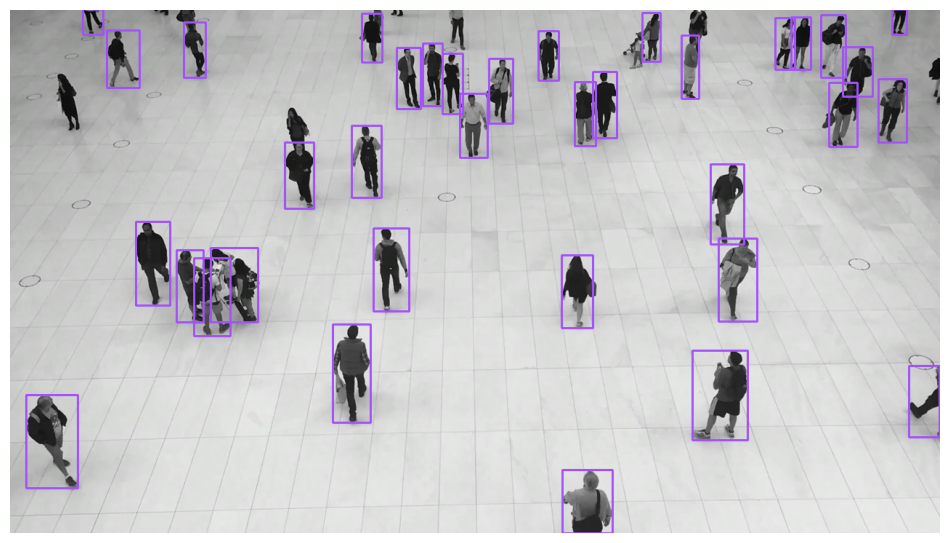
It’s easy to get swept up in the hype of fully autonomous AI, but the reality is far more grounded. Robotaxis, from industry giants like Waymo and Cruise to emerging players, are trained on petabytes of real-world driving footage and intricate simulations. Who makes that data usable for machine learning algorithms? Human annotators, globally. These skilled individuals sift through endless hours of video and sensor data, painstakingly identifying and labeling everything: pedestrians, cyclists, traffic lights, road signs, even the subtle sway of a tree branch, or the sudden appearance of a child’s ball rolling into the street. They meticulously outline vehicles, trace lane lines with pixel-perfect precision, segment individual pixels distinguishing a parked car from a shrub, and add crucial contextual metadata.
Think of it as teaching a child: you show them countless examples of a ‘dog’ until they can reliably identify one. For AI, this teaching happens at an industrial scale, demanding relentless human input. This labeled data is the lifeblood of the computer vision and decision-making systems that power autonomous vehicles.
Why Human Annotation Remains Indispensable for AI
Why can’t AI just figure this out on its own? AI excels at identifying patterns within structured data, but the real world is inherently unstructured, ambiguous, and chaotic. A sudden downpour, a poorly marked construction zone, or even the nuanced body language of a pedestrian signal intent – these are incredibly complex for an algorithm to interpret without extensive, human-validated training.
-
Handling Edge Cases: The ‘Long Tail’ of Reality
These are the rare, unusual, or tricky scenarios – the ‘long tail’ of driving reality – that happen infrequently but are absolutely critical for safety. Think a child chasing a ball into the street, an obscured traffic light, or an unexpected animal crossing. Humans instinctively identify and provide context for these anomalies, a capability AI still struggles to replicate autonomously.
-
Ensuring Unwavering Accuracy
AI models are only as good as their training data. Human annotators serve as the ultimate quality control, meticulously verifying that every label is precise and correct. This precision directly impacts the safety, reliability, and trustworthiness of a robotaxi’s decision-making process. No room for error here.
-
Adapting to a Dynamic World
The world refuses to be static. New vehicle types, evolving road signs, temporary diversions, or even subtle shifts in cultural driving norms emerge constantly. Humans adapt. They can rapidly identify and label these novel elements, providing AI with the crucial, updated context it needs – far faster than an algorithm could learn them from scratch.
This painstaking, continuous work refines the AI’s understanding, drastically reducing errors and improving its ability to navigate complex, dynamic environments safely and efficiently.
The Global Scale of This Data Labeling Phenomenon
The sheer scale of this operation is staggering. To collect, process, and label the petabytes of data required, robotaxi companies partner with specialized data annotation firms. These companies employ tens, even hundreds, of thousands of annotators, often distributed globally, operating a 24/7 global operation. It’s a testament to the immense computational and human resources required to bring advanced AI to fruition. This isn’t a temporary stopgap or a mere side gig. It’s a rapidly expanding, multi-billion dollar industry, underscoring the indispensable role of human intelligence in training sophisticated, real-world AI.
Beyond the Hype: The Human-AI Partnership of Tomorrow
This profound reliance on human annotation shatters the popular, often utopian, narrative of AI as a purely self-sufficient, omniscient entity. It highlights that even the most cutting-edge artificial intelligence is, for the foreseeable future, an intricate, symbiotic partnership between sophisticated algorithms and diligent human intelligence. This ‘human in the loop’ approach isn’t a temporary crutch; it’s a fundamental component of building robust, safe, and trustworthy AI systems, particularly in high-stakes applications like autonomous driving.
This symbiotic relationship suggests a continually evolving future for human-AI collaboration. While AI will automate many tasks, it will also create entirely new categories of work, like data annotation, validation, and ethical oversight, that leverage uniquely human capabilities such as common sense, empathy, and contextual understanding. The dream of truly autonomous robotaxis is tantalizingly close, yet it’s a dream being painstakingly built – pixel by pixel, bounding box by bounding box, label by label – by thousands of dedicated human minds working tirelessly behind the scenes. The next time a ‘driverless’ vehicle glides past, remember the invisible architects who made its journey not just possible, but safe.