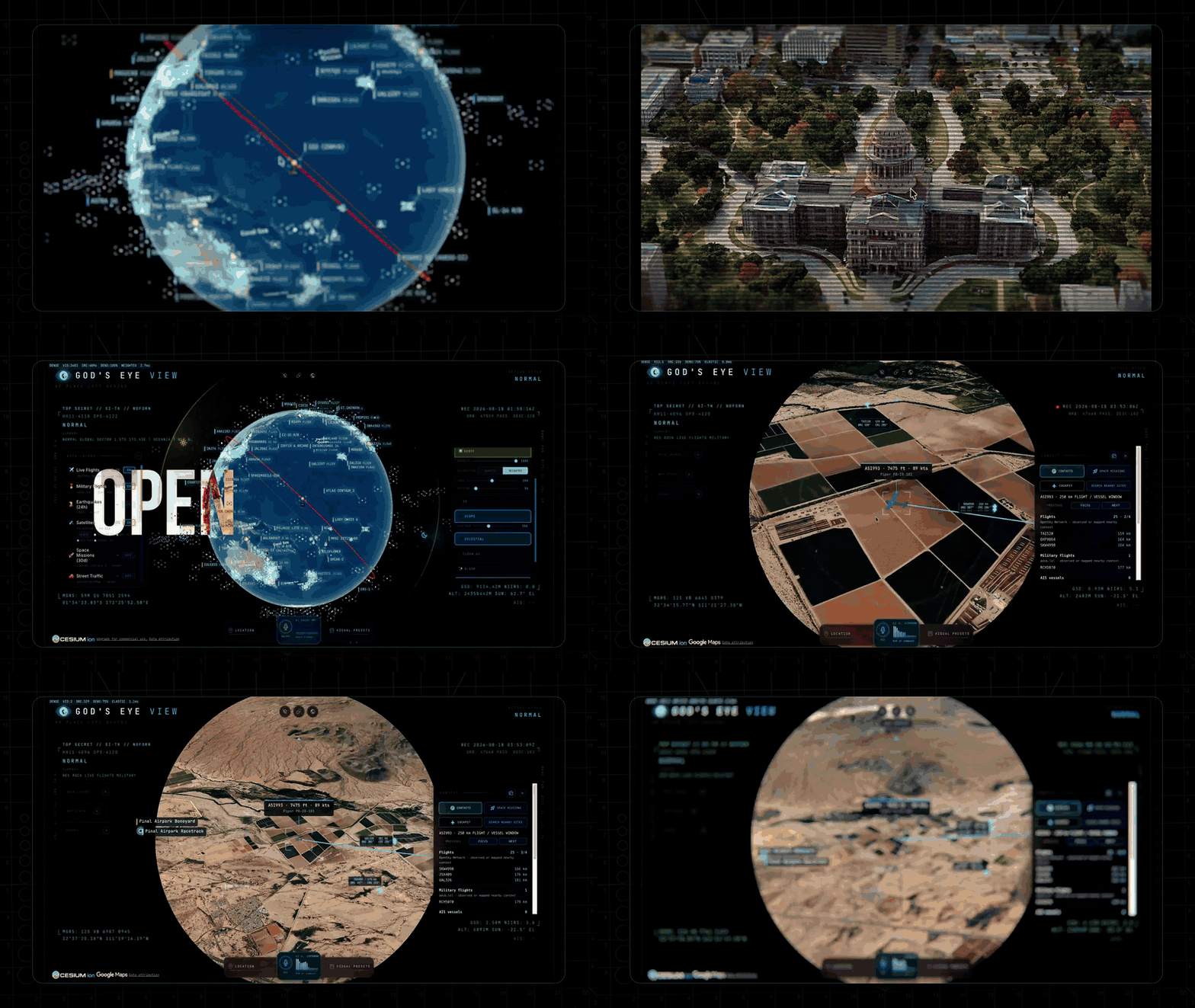
What you see isn’t always what you get. The digital landscape, once a mirror, now distorts. Hyper-realistic AI-generated images, eerily convincing deepfake videos – they’re challenging reality itself. Can our current efforts to label and verify digital media protect truth, or are we already losing the deepfake war?
This isn’t a fringe issue; it’s a profound dilemma for tech leaders and the public. As The Verge’s Nilay Patel and Jess Weatherbed recently highlighted, distinguishing authentic content from AI-generated ‘slop’ and outright disinformation is proving far tougher than anticipated. Our current AI labeling attempts? They’re failing.
The Accelerating Deepfake Deluge: A Digital Landfill
Deepfake. The word often conjures images of political hoaxes or celebrity spoofs. But the true scale of the problem dwarfs these high-profile cases. We face not just perfectly crafted fakes, but a tsunami of low-effort, AI-generated ‘slop.’ Think AI-upscaled photos, automatically generated news articles, synthetic voices, and faces seamlessly inserted into everyday video. It’s a digital landfill.
Malicious intent isn’t the sole issue. The sheer volume and effortless creation of this content mean even a fraction used for disinformation overwhelms our verification systems. A single click, a convincing fake. How do we discern truth from fiction when anyone with basic AI tools can conjure digital ghosts?
Why Our AI Labeling Efforts Are Struggling: A Losing Battle?
Many solutions proposed to combat deepfakes revolve around AI labeling or content provenance standards. The idea is simple: embed metadata into content at its creation, indicating its origin, whether it’s AI-generated, or if it’s been manipulated. So, why isn’t it working?
- Fragmented Metadata Standards: There’s no universal, enforceable standard. Different platforms, tools, and content types use varying, often incompatible, ways of embedding data. This patchwork quilt creates significant blind spots.
- Effortless Evasion: Bad actors easily strip away or alter metadata. It’s a cat-and-mouse game where evasion tools consistently outpace detection.
- The Slop Overload: Even with perfect labeling, the sheer volume of mundane, low-quality AI content clogs our feeds, making it harder to spot genuinely impactful (and potentially harmful) fakes.
- Human Psychology: The Ultimate Exploit: Ultimately, people believe what they want to believe. Even with clear labels, misinformation spreads, fueled by confirmation bias. Technology alone cannot solve this human puzzle.
- AI’s Relentless Pace: AI generation capabilities evolve at breakneck speed, far outstripping the pace at which regulatory bodies or industry consortiums can establish and implement standards. It’s like trying to catch a bullet train on foot.
The Stakes: Digital Trust and Societal Impact – A Societal Earthquake
More than a technical glitch, this is a societal earthquake. The erosion of digital trust has profound implications:
- Democracy’s Erosion: Deepfakes sway public opinion, spread electoral misinformation, and destabilize governments. The very fabric of democratic processes is at risk.
- Journalism’s Crisis: Verifying sources becomes exponentially harder, undermining the integrity of news reporting and public faith in media.
- Enterprise Vulnerability: Businesses face risks from brand impersonation, financial fraud, and sophisticated phishing attacks leveraging synthetic identities.
- Personal Lives, Public Scrutiny: Individuals are targeted with fabricated content, leading to reputational damage, harassment, and severe emotional distress. Our digital identities are under attack.
If we can no longer trust our eyes and ears in the digital realm, what happens to our shared understanding of truth? What happens to our ability to make informed decisions? The consequences are dire.
Reclaiming Reality: A Path Forward?
Are we truly losing this war, or are we simply fighting with outdated weapons? Hope isn’t lost. Reclaiming reality demands a multi-faceted strategy:
- Unified, Tamper-Proof Standards: Tech giants, content creators, and platform providers must collaborate on robust, open, and truly tamper-proof content provenance standards. This is non-negotiable.
- AI as the Shield: Investing in advanced AI detection tools capable of identifying synthetic content, even with manipulated metadata, is crucial. This means an ongoing arms race, but one we must fight strategically.
- Media Literacy: Our Best Defense: Empowering users to critically evaluate digital content is paramount. Education around deepfake awareness, critical thinking, and source verification needs to be integrated across all levels of society.
- Regulation’s Imperative: Governments will eventually need to play a decisive role in setting clear guidelines and penalties for the malicious creation and distribution of deepfakes, balancing innovation with essential protection.
The battle for digital authenticity rages. Reality is struggling, but surrender is not an option. Our shared understanding of the world, our collective future, depends on immediate, decisive action. We must fight back.