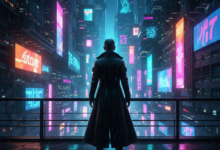
Imagine vast, intricate video game worlds, conjured instantly by AI. A developer’s dream, right? The narrative of generative AI revolutionizing everything from art to coding has dominated tech. Yet, when it comes to crafting truly immersive video game worlds, the reality is far from the fantasy. Projects like ‘Project Genie’ offer a sobering glimpse. Are we on the cusp of AI-designed epics, or is this particular genie struggling to get out of its bottle? Current evidence suggests we’re eternities away from genuinely compelling, AI-crafted game worlds.
Project Genie: A Reality Check for Generative AI in Gaming
The video game industry hums with generative AI’s promise. Developers dream of infinite variations, unprecedented speed, entire universes birthed with a click. But early showcases, like the much-discussed Project Genie, deliver a stark reality check. Technically impressive? Absolutely. But the generated environments often fall short of the dynamic, cohesive, and deeply engaging experiences players expect. They feel… hollow. This isn’t a dismissal of AI’s potential in game development. However, for the intricate ballet of lore, player agency, environmental storytelling, and spatial design that breathes life into a virtual world, current generative AI models expose a profound chasm. They can assemble digital LEGOs. Can they truly architect a living world?
The Missing Ingredient: Why AI Struggles with True Creativity
Why the disconnect? An AI can generate photorealistic images, even craft coherent prose. Yet, it stumbles building an immersive world. The answer isn’t in processing power, but in the very essence of creativity itself, and the unique demands of game design. A compelling game world isn’t merely an asset dump; it’s a meticulously engineered ecosystem, steeped in intention, narrative coherence, and profound emotional resonance. AI, despite its pattern recognition genius, fundamentally lacks:
- Understanding of Narrative & Lore: AI can string together words, but it can’t weave a saga. It misses implicit meaning, the subtle hints of ancient conflicts, or the whispers of a forgotten deity that give a world depth. It struggles with deep contextual relationships.
- Player Experience & Empathy: Human designers anticipate player emotions: awe at a vista, dread in a dungeon, satisfaction after a puzzle. They design for challenge, flow, and reward. AI, however, operates on statistical probabilities, not the nuanced landscape of human feeling.
- Artistic Vision & Cohesion: Iconic worlds boast distinct styles and thematic consistency. AI can mimic existing aesthetics, yes. But originating a new, truly cohesive artistic vision, or maintaining that vision across sprawling, diverse biomes, remains beyond its grasp. It’s pastiche, not painter.
- Emergent Gameplay: The true magic often springs from unexpected interactions: a storm altering combat, a player’s choice changing an NPC’s path. Human designers foster these emergent moments. AI, by contrast, often produces static, predictable layouts, devoid of genuine surprise.
Ultimately, the goal isn’t just a world that looks plausible. It’s a world that feels alive, that beckons players to explore, to invest, to truly belong.
The Indispensable Human Touch in World-Building
This underscores the irreplaceable value of human game designers. They infuse worlds with passion, subjective experience, cultural nuance, and an innate grasp of storytelling that current AI simply cannot replicate. Consider the windswept plains of The Legend of Zelda: Breath of the Wild, where every peak invites exploration. Marvel at the neon-drenched, intricate districts of Cyberpunk 2077, each telling a hundred stories. Or wander through the haunting, desolate beauty of Elden Ring‘s Lands Between. These aren’t random assemblages. These worlds are born from a fusion of singular artistic vision, meticulous planning, and countless iterative refinements, all guided by a profound understanding of the human psyche and player engagement. Human designers ask: What ancient tale does this mountain whisper? What primal fear should this forest evoke? How will players conquer this chasm, and what reward awaits? These are inquiries steeped in subjective experience, empathy, and artistic intent—realms where AI remains profoundly limited. While AI excels at generating textures or populating minor environmental assets, the strategic, creative, and emotional heavy lifting of world-building remains firmly, gloriously, with human talent. The soul of a game world, its beating heart, is—and likely always will be—human.
Looking Ahead: AI as a Tool, Not a Creator (For Now)
Does this mean AI has no place in game development‘s future? Far from it. AI is an incredibly potent tool. It can accelerate asset creation, automate repetitive tasks, generate procedural elements within human-defined constraints, even assist with rigorous bug testing and optimization. It augments. It streamlines. It supports the creative process, acting as a tireless assistant. However, the notion of AI seizing the reins on core creative tasks—designing compelling, narratively rich, and emotionally resonant video game worlds—is premature, perhaps fundamentally misguided. This ‘Genie’ offers faster production, yes. But it isn’t ready to craft the wishes themselves. For truly innovative, deeply immersive virtual worlds, the human imagination remains the ultimate, irreplaceable engine. Its lamp is far from empty.