Forget everything you know about keyboards and monitors. By 2026, two seismic shifts – ‘vibe coding‘ and ‘smart glasses‘ – are set to converge, promising to redefine the very fabric of software development. Imagine your entire coding environment not confined to a desk, but a dynamic, holographic canvas floating around you, responsive to your gestures, voice, and even your subconscious intent. Is this the long-awaited paradigm shift for the developer experience (DX), or merely another captivating, yet ultimately impractical, tech demo destined for the digital graveyard?
Tech outlets like Gizmodo are already buzzing, painting vivid pictures of developers interacting with code through intuitive movements, transforming abstract ideas into functional logic with unprecedented fluidity. This isn’t just about a new interface; it’s a fundamental reimagining of human-computer interaction in the realm of creation. But before we project ourselves into this augmented future, let’s dissect these two powerful concepts.
What Exactly *Is* Vibe Coding?
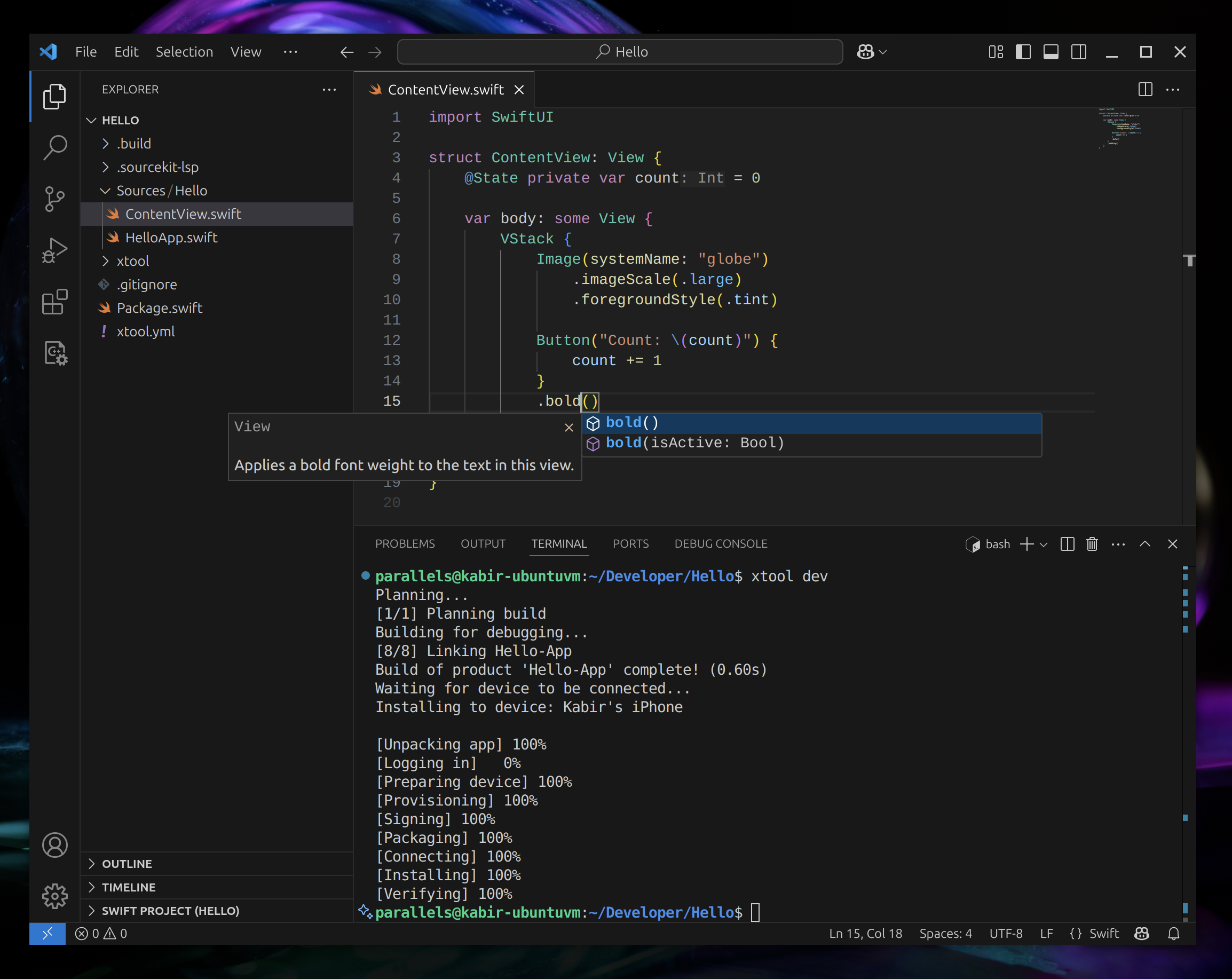
At its core, ‘vibe coding’ transcends traditional input methods. Picture writing software not by typing characters, but by a symphony of spoken commands, deliberate hand gestures (like pinching to refactor a block of code or swiping to instantiate a new class), and perhaps even subtle eye-tracking. It’s an advanced evolution of low-code/no-code platforms, pushing the boundary where a developer’s raw intent, their ‘vibe,’ translates directly into functional logic. The goal? To drastically minimize the abstraction layers between thought and execution, making coding more natural, accessible, and potentially accelerating specific tasks like UI design or rapid prototyping.
This isn’t about replacing the nuanced precision of deep, complex algorithms with a few air-taps. Instead, it aims to make the initial scaffolding, the visual component assembly, or even the iterative design process significantly more fluid and intuitive. It hints at a future where coding isn’t exclusively for the keyboard warrior, but for anyone who can articulate an idea through motion, voice, or spatial manipulation, democratizing access to software creation.
Smart Glasses: The Immersive Canvas for Dev
Now, couple that intuitive interaction with cutting-edge smart glasses. We’re light-years beyond the rudimentary Google Glass 1.0; today’s and tomorrow’s devices from powerhouses like Meta (Quest Pro, upcoming AR glasses), Apple (Vision Pro), and others are pushing the frontiers of spatial computing. These are sophisticated wearables designed to seamlessly overlay digital information onto the real world, creating an augmented reality (AR) experience that feels intrinsically integrated, not merely projected. They offer a suite of transformative capabilities:
- Always-on Access: Your entire development environment – IDE, console, documentation – is perpetually present, accessible with a glance or a subtle gesture, wherever you are.
- Spatial UI & Data Visualization: Envision visualizing complex data structures as interactive 3D models floating around you, or debugging an application with syntax errors glowing red directly over the problematic UI element in your physical space. API documentation could appear contextually, hovering beside your code.
- Hands-Free Interaction: Absolutely critical for gesture-based input, liberating your physical hands for other tasks, physical interaction, or simply more expressive communication during collaborative sessions.
The profound promise here is to shatter the confines of the two-dimensional screen, empowering developers to interact with their code and data in a vastly more immersive, intuitive, and ultimately productive manner. The developer experience (DX) could be radically redefined, evolving from a static, confined workstation to an expansive, dynamic, and hyper-personalized spatial canvas that adapts to your workflow.
The Road Ahead: Challenges and Grounded Skepticism
While the vision is exhilarating, the journey from conceptual breakthrough to practical, widespread implementation is notoriously challenging:
- Accuracy & Ergonomics: Can gesture and voice input ever truly rival the precision, speed, and tactile feedback of a physical keyboard and mouse for intricate coding tasks? Will prolonged ‘vibe coding’ lead to novel forms of digital strain – perhaps the “air-tapper’s elbow” or “spatial vision fatigue”?
- Cognitive Load & Clutter: While immersive, an improperly designed or overly cluttered AR environment could easily overwhelm developers, transforming a focus-enhancing tool into a distraction-generating nightmare. Imagine a thousand holographic windows vying for your attention.
- Privacy & Security: As these devices become intimately aware of our physical surroundings, biometric data, and every action, the privacy implications escalate dramatically. Who owns the data generated by your ‘vibe’ and environment?
- Hardware Limitations: Current smart glasses, despite advancements, still grapple with significant hurdles: battery life measured in hours, not days; limited field of view; processing power bottlenecks; and the fundamental challenge of designing comfortable, all-day wearable tech.
For the vast majority of developers, the notion of abandoning their cherished mechanical keyboards, multi-monitor setups, and familiar IDEs for a world of air-tapping and voice commands is met with a healthy, well-earned dose of skepticism. Years of ingrained muscle memory aren’t easily overwritten by a new gesture vocabulary.
Beyond the Hype: What Does This Mean for Innovation?
Despite these formidable hurdles, the audacious fusion of vibe coding and smart glasses represents a monumental leap towards more natural, human-centric computer interaction. While it’s unlikely to fully supplant traditional coding for every single task, it unlocks a treasure trove of fascinating possibilities:
- Rapid Visual Prototyping: Quickly sketching out UI elements, data flows, or basic logic directly in a visual, spatial environment, akin to building with digital LEGOs.
- Enhanced Visual Debugging: Imagine stepping through code and seeing variable values, function calls, and execution paths visualized as dynamic overlays in your AR view as the program runs.
- Revolutionary Collaborative Development: Multiple developers, whether co-located or remote, could interact with a shared, holographic codebase, pointing, annotating, and co-creating in a truly shared spatial workspace.
- A New Generation of Developer Tools: This paradigm will undoubtedly catalyze the creation of entirely new tooling ecosystems, purpose-built for spatial computing and gesture-based interaction, moving beyond flat-screen metaphors.
This isn’t merely about making existing tasks marginally easier; it’s about enabling entirely novel ways to conceptualize, design, and construct software. It holds the potential to democratize access to development, drawing in a new cohort of creators who intuitively thrive on visual and spatial interfaces rather than being constrained by command lines and text editors.
The Bottom Line: A Glimpse into Tomorrow’s Dev Workflow
Vibe coding on smart glasses is undeniably one of those ‘two-for-one’ buzzword experiences that possesses the raw potential to either define a new era of software development or, like many ambitious tech concepts, fade into a curious footnote. While a healthy dose of skepticism is not only warranted but essential, dismissing its long-term implications would be profoundly short-sighted. This fusion represents a bold, frontier-pushing exploration into the future of coding, stretching the boundaries of what’s conceivable in wearable tech and spatial computing.
Will every developer be air-tapping their magnum opus by 2026? Highly improbable. But will significant portions of the development lifecycle – from design and prototyping to debugging and collaboration – become dramatically more intuitive, visual, and spatially aware thanks to these innovations? I’d stake a significant bet on it. The ultimate success, as always, hinges on finding the precise problems that this powerful new paradigm is uniquely equipped to solve, rather than simply shoehorning existing workflows into a shiny new interface. Prepare yourself; the future of software development is looking increasingly less like a glowing rectangle and more like the expansive, interactive world around us.