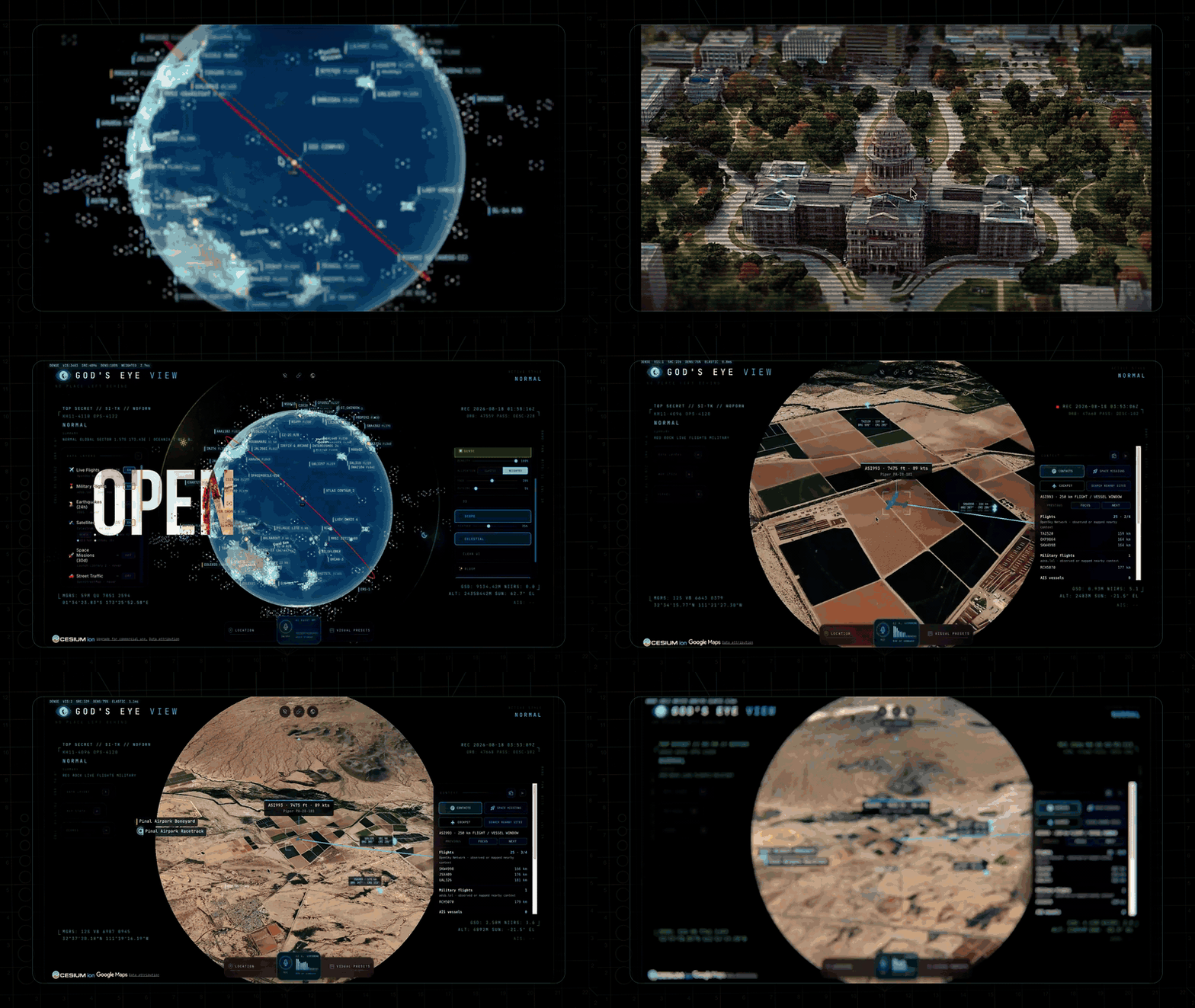
A rough-and-tumble Nintendo world, blocky characters, questionable physics—all from a few text prompts. This week, one user experienced precisely that with Google’s Project Genie, conjuring delightfully bad yet profoundly insightful knockoffs of classics like Super Mario 64 and a Metroid Prime-esque adventure. It’s not just about a chuckle at rudimentary results; it’s a glimpse into game development’s seismic shift.
Forget ‘Metroid Prime 4: Beyond’ for a moment. These early, imperfect AI-generated experiences, while crude, unpack a profound truth about generative AI’s impact on game development. The shift isn’t merely in copying; it’s in revolutionizing how we conceptualize, prototype, and construct interactive worlds. This is a paradigm shift.
Google’s Project Genie: A Rapid-Fire Forge for Virtual Worlds
At its core, Project Genie is Google’s nascent generative AI tool, empowering users to sculpt 3D worlds and playable experiences from simple text prompts. Picture a digital sandbox, a rapidly evolving forge for virtual environments. It translates raw ideas—from the basic to the outlandish—into tangible, albeit alpha-stage, interactive spaces. Instantly.
This rapid iteration, this frictionless experimentation, defines Genie’s allure. The original user declared it “what I had the most fun using.” That’s the crux. Joy isn’t just about polished output; it’s the raw power of conceptualizing, then witnessing a nascent virtual world materialize almost instantly. A game changer.
The ‘Bad’ is Good: Why AI’s Imperfect Creations Matter for Game Dev
Why do these low-poly, ‘bad’ Nintendo knockoffs, evoking a fever dream, command attention from professional tech and gaming circles? It distills down to two critical elements: potential and process. This isn’t just novelty. This is disruption.
- Rapid Prototyping: Weeks of level design? Gone. Project Genie can conjure an entire interactive environment, complete with rudimentary elements, in mere minutes. This dramatically accelerates ideation. Faster testing. Quicker refinement of core gameplay loops.
- Accessibility for Creators: Indie developers, hobbyists, even aspiring designers lacking extensive 3D modeling or coding expertise gain a powerful ally. Genie slashes the barrier to entry, democratizing world-building. More diverse voices. More innovative games.
- Highlighting AI’s Current State: These ‘bad’ knockoffs are a crucial benchmark. They reveal generative AI’s current prowess in complex creative tasks: immense power for initial generation, yet a clear demand for human oversight. Artistic vision, polish, soul—these still require the human touch. AI generates. Humans refine.
Beyond Faux Mario: Project Genie’s Real-World Implications for Game Dev
Streamlining Asset Creation: A New Paradigm
Textures, 3D models, basic character animations—generative AI will soon be an indispensable assistant in asset creation. This isn’t artist replacement. It’s empowerment. Artists can now laser-focus on truly complex, unique, narrative-driven elements, while AI handles the procedural, the background, the grunt work. Efficiency amplified.
Democratizing World-Building: Lowering the Barrier
Decades ago, immersive 3D world creation demanded immense technical expertise and resources. Project Genie shatters that barrier. It hints at a future where world-building becomes intuitive, accessible to a vast spectrum of creators. Expect an explosion of diverse, innovative gaming experiences. A new creative renaissance.
Navigating the Generative AI Landscape: IP, Ethics, and Ownership
The rise of Project Genie inevitably thrusts critical conversations into the spotlight. When AI generates content “like Super Mario 64” or “a Metroid Prime experience,” intellectual property (IP) transforms into a legal labyrinth. How do we define originality? Who truly owns the AI’s output? These are not trivial questions.
The industry grapples with these questions now. As generative AI sophistication skyrockets, robust frameworks for ethics, ownership, and fair use become non-negotiable. They are essential to secure a healthy, innovative ecosystem for all creators. Without them, chaos.
The Road Ahead: Project Genie’s Vision for Tomorrow’s Game Design
Google’s Project Genie, despite its current knack for charmingly imperfect Nintendo knockoffs, is a powerful harbinger. This isn’t merely AI making games. It’s AI fundamentally reshaping the game developer’s toolkit and workflow, accelerating creation, broadening accessibility, and injecting pure fun back into the process. A revolution unfolds.
We stand at the precipice of a revolution. For anyone immersed in tech and gaming, this is exhilarating—even if the initial steps resemble a glitchy Super Mario level from an alternate reality. The future of play is here. And it’s hilarious.