Twenty thousand pages of critical documents, brimming with potentially explosive information. In late 2023, this was the stark reality for researchers poring over the Jeffrey Epstein estate files. Luke Igel and his team faced a monumental human task: deciphering garbled emails and fragmented conversations. But here’s the paradox for our AI-driven world: if humans struggle, why do our cutting-edge AI models, capable of writing poetry or debugging complex code, stumble so profoundly with a simple PDF?
You’d expect a Large Language Model (LLM) to breeze through a PDF. Yet, this humble, ubiquitous file format consistently stumps the world’s most advanced AI. This isn’t just an academic curiosity; it’s a **fundamental bottleneck**, locking away insights from vast swaths of enterprise data and impeding true digital transformation.
The Unseen Challenge: Why PDFs Are AI’s Kryptonite
A PDF isn’t merely text on a page for AI. It’s a ‘snapshot,’ a ‘print layout’ designed for visual consistency across devices and printers, not for easy computational parsing. Think of it as a picture of a book, not the raw, underlying text itself.
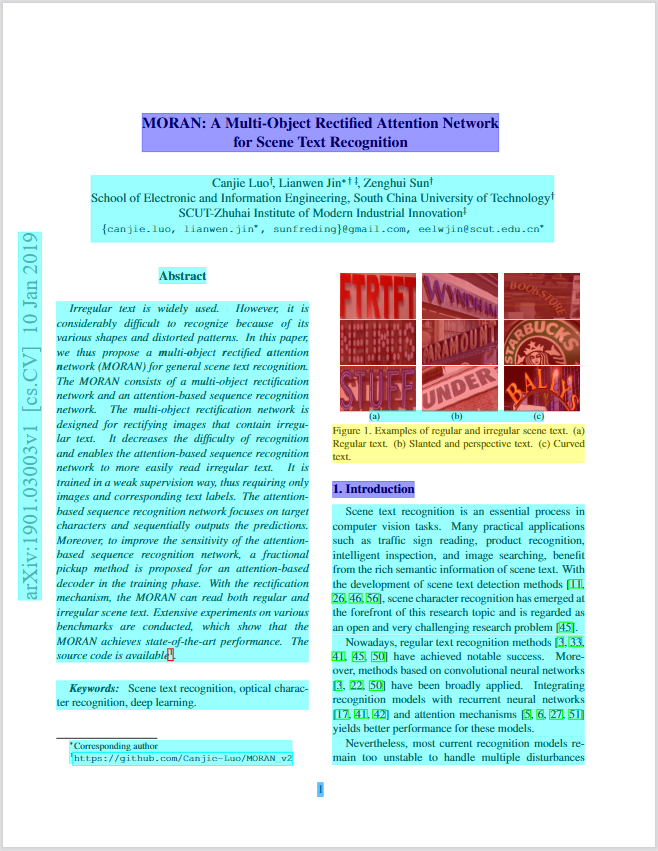
- Layout Complexity: PDFs contain intricate layouts with multiple columns, varying font sizes, embedded images, tables, headers, and footers. This visual structure, clear to the human eye, becomes opaque – a ‘semantic void’ – for an AI primarily processing linear text.
- Embedded Objects: Unlike a simple text document, a PDF can embed fonts, images, and other multimedia. Direct text extraction often becomes a messy process, creating digital hieroglyphs and losing crucial context or meaning.
- Table Recognition: Identifying and extracting structured data from tables within PDFs is notoriously difficult. An AI might see a bewildering grid of lines and characters, but understanding which data points belong to which rows and columns, and their relationships, is a specialized task.
- Scanned Documents: Many PDFs are scans of physical documents. These demand Optical Character Recognition (OCR) just to turn them into machine-readable text. Even then, OCR, often imperfect, introduces a fresh layer of ambiguity and error.
The core issue is that a PDF strips away the underlying semantic structure that LLMs crave. It’s like giving an AI a picture of a book page and asking it to understand the story, rather than the raw text itself. This ‘lossy compression’ of information presents a significant hurdle for sophisticated AI document processing.
The Data Extraction Bottleneck: Where LLMs Hit a Wall
Large Language Models thrive on clean, structured, and contextualized text. Their training data is often meticulously prepared. When you feed them a raw PDF, they’re essentially handed fragmented or misaligned puzzle pieces. This necessitates a robust ‘pre-processing’ layer – a kind of digital Rosetta Stone – to convert the PDF’s visual information into a semantically coherent format usable by LLMs. This is where the real challenge lies, and it has significant consequences:
- Accuracy & Reliability: Poor parsing leads to ‘garbage in, garbage out.’ If the AI misinterprets the data during extraction, any subsequent analysis by the LLM will be flawed, potentially leading to incorrect decisions or insights.
- Time & Cost: Developing and maintaining specialized PDF parsing tools is expensive and time-consuming. Alternatively, relying on manual data extraction for large volumes of documents becomes a significant operational cost, draining resources.
- Scalability Issues: The inability to efficiently and accurately process PDFs at scale severely limits an organization’s capacity to leverage AI for critical tasks like legal discovery, financial analysis, or research synthesis.
For businesses seeking to automate workflows and extract critical information from contracts, invoices, research papers, or regulatory filings, this isn’t just an inconvenience; it’s a **major impediment to digital transformation** and the promised efficiencies of AI.
Bridging the Gap: The Path to Smarter Document AI
So, what’s being done to tackle this ‘PDF Paradox’? The solutions currently employed often involve a multi-layered approach, combining cutting-edge techniques:
- Advanced OCR: Moving beyond basic text recognition to truly understand document structure, layout, and content hierarchy.
- Specialized Document AI Platforms: Tools like Google Cloud Document AI, AWS Textract, and various innovative startups offer sophisticated Intelligent Document Processing (IDP) services. These combine computer vision with machine learning to interpret layouts and extract structured data.
- Human-in-the-Loop: For high-stakes applications, human validation of extracted data remains crucial, especially for complex or ambiguous documents, ensuring accuracy and mitigating risk.
- Vector Databases & Semantic Search: After initial parsing, embedding extracted text into vector databases allows LLMs to perform semantic searches and query documents more effectively, even if the initial extraction wasn’t absolutely perfect.
Ultimately, the goal is to develop AI that possesses true semantic understanding of document layout and context, moving beyond mere text extraction to grasp the intended meaning and relationships within the document.
What This Means for Enterprise AI and Beyond
The ongoing struggle with PDFs highlights a critical frontier for AI development. For industries like legal, finance, healthcare, and government, where vast amounts of crucial information are locked within these files, solving the PDF problem means:
- Enhanced Compliance & Risk Management: Accurately extracting contractual clauses, regulatory data, or audit trails becomes automated and reliable.
- Massive Efficiency Gains: Automating countless hours of manual data entry and review, freeing up human capital for higher-value tasks.
- Unlocking New Insights: Enabling AI to analyze previously inaccessible or labor-intensive datasets, driving innovation and competitive advantage across the board.
The humble PDF truly represents the ‘last mile problem’ for many AI applications. As LLMs become more powerful and ubiquitous, the demand for robust and intelligent document processing will only intensify. The next breakthrough in AI might not just be about bigger models, but about smarter, more empathetic algorithms that can finally comprehend the nuanced world encapsulated within those ubiquitous .pdf files.